Monday, June 8, 2020

William Ginn, Baker of Cambridge died 1707

William here, son of Thomas in the last post, has perplexed me for about 25 years.  I was in the Huntingdon Archives many years ago when I remember turning up the marriage of a William Ginn who was a Quaker.  Years after that, I obtained the will of a William who lived in Cambridge and realised it was the same man.  More years passed, and I found an apprenticeship record of the man's only son.  That was where it then sat.  I knew of non-conformist records of a William in London, but had no idea that guy was a Quaker - in fact the names of his children were so odd I thought he was a foreigner !

The "Eureka" moment came in 2014, when I came across a marriage entry on a pedigree loaded up my an American researcher, Mary Ann Blackburn on Ancestry, which gave details of the marriage of a William Ginn in Bristol to an Ann Watts.  Nobody knew who the father mentioned in the record was - but I did!  A day off from work researching  at the Cambridge Archives uncovered the whole story.


William here was born in 1629.  It is unlikely that he ever went to fight in the English Civil War, but I cannot rule it out.  What I know is that following his mother's  death he and his brother Joshua made their way to Cambridge.

William was a Baker, though we do not know exactly when he took up that occupation.  What I do know is that in about 1652 he married a lady called Margaret, the marriage entry seems to have been lost to us.

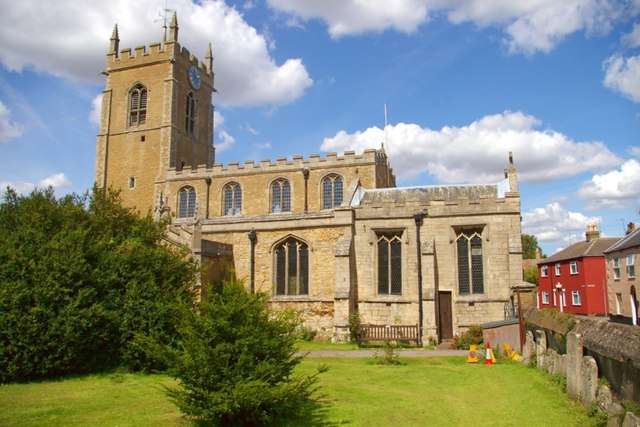
William and Margaret lived in the parish of St Giles in Cambridge, the old church of which was pulled down and completely rebuilt in the 1870s, but the old church is shown below.


William and Margaret had no less than eight children whilst in St Giles, but living conditions in any city at the time were extremely challenging with the levels of disease and lack of sanitation, and no less than seven of the children died in infancy.

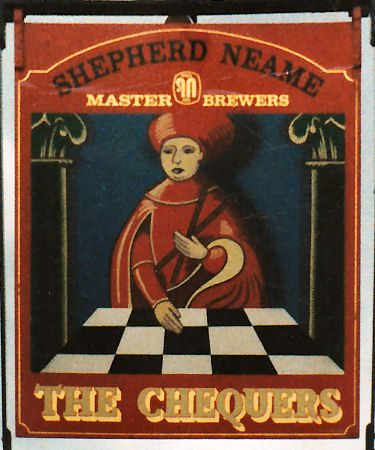
Joshua, William's brother died in 1665, which brought money to William and he bought the "Sign of the Chequer" or "Chequers Inn" in that parish and like many of his time had the dual occupation of running the pub and making money as a baker.  The Inn no longer stands and I cannot find anything about it.


Margaret died at St Giles in 1666.  William was left with his daughter Elizabeth, aged nine.  She had been mentioned in Uncle Joshua's will the year before.

William did not remarry until about 1670, he married a Sarah but again the marriage entry is lost to us. At the time of the marriage William moved to St Peters in Cambridge, a tiny parish with a tiny church, but he kept the Chequers Inn.


William and Sarah had two children, including the third attempt at a son called William for William snr, this younger William being the later father of Tralucia Ginn but, again, of the two children only one survived.  William Ginn junior was baptised in 1672 in the  ancient font there decorated with four mermen and still in use (below).


Sarah died  in 1676, possibly with a late child.  William now had two children at home, Elizabeth who was 19 and her half brother William who was 3. It cannot have been easy and it likely that Elizabeth acted as Mum to Billy for the next five years .

The Quakers had been persecuted in Cambridge in the 1660s, they had meetings there, St Ives, Huntingdon - you name it, although there were no formal meeting houses as such, they met at people's homes.  Ironically the earliest surviving actual Quaker Meeting House in England is well known to me, being in Hertford in Hertfordshire and built in 1670, below.


But in Cambridge they were a small, relatively secretive sect, and the government and church of the day, whipped up by the closet Catholic Stuart royal dynasty, persecuted them, as well as other protestant dissenting groups such as the Congregationalists.


I found absolutely no evidence that William Ginn was a Quaker during the time of the persecutions, quite to the contrary, he was a practising Anglican, but by the time that the persecutions started to die down in 1680, and certainly by the time that the Stuart dynasty fell and  of the Act of Toleration (Religious)  of 1689, William here was a Quaker.

We are back to the first record I ever found of him, when, at the Quaker Huntingdon Meeting of 1681, William Ginn of Cambridge married a Mary Bardolf - they actually married at a house in St Ives (Hunts Archives)  He was alternatively to be of Huntingdon or Cambridge hereafter. 

Not only did William become a Quaker, but there is evidence in the records that he became quite bigoted about it.  Where once it was the non conformists who were persecuted, now William saw himself as the conformist and the outsiders as "the others".  The circle turned.

In 1687, William apprenticed his only son into the Turner's Company in London and hoped for good things, but life had its usual ups and downs for him in later life, he saw his only daughter buried, his last remaining child married.  At the end you wonder how he saw the sum of his life.

William Ginn died in 1707 - he was 78. It I unclear where he is buried. His original will (Cambs Archives) , with his signature is below.  Neither his brother or his father could read and write, but William could.

William had acquired copyhold property in Chesterton ( Cambridgeshire) which was therefore held of the Manor.  Some manorial records for the period survive at the Cambridge University Library (says the Manorial Documents Register) which may say what this was, and that, together with the The Chequers Inn in St Giles was left to a Robert Nichols  and Mary his wife, declared to be William's son in law (from which I have deduced either Mary Bardolf had been a widow when she married William or William had an unrecorded daughter Mary - the likely Robert Nicholls  married Mary Church at Godmanchester in 1694) . William the son (who was already doing very nicely in London)  just received an acknowledgement and Mary his widow just the household goods and the princely sum of £5!


Mary Ginn died at Chatteris near St Ives in 1711 (Huntingdon Meeting).  It is likely she returned to where she came from after William died.


Two children survived viz

Elizabeth - this young lady intrigues me.  I doubt she led a happy life. She was born in 1657 and spent the first years of her life watching her siblings die, then her mother when she was 9.  Her father remarried and then his second wife died,  Elizabeth I am sure (together with any maid) being charged with helping to bring up her half brother whilst Dad was working.

Then, now an adult, Elizabeth witnessed her father becoming a Quaker.  The inference in the records is that she was not - at least not a willing one.

Elizabeth married, in my view likely after her half brother was apprenticed in 1687 - so about 1690 then.   I cannot find the marriage entry but she married someone with the surname Rose.  My suspicion is that it was not a Quaker marriage and her spouse was a local man.

She had one child that survived, a son, Ginn Rose.  He was alive when his grandfather died in 1707, probably in his teens.  He received a terse bequest "I give to my grandson Ginn Rose the sum of forty shillings if he lives and comes again but not else".  So he was clearly not a Quaker.  I cannot find any reference to a Ginn Rose in any record.

Elizabeth sadly died in 1693 aged 36.  Whether she was a Quaker or not she was buried as one, declared to be of Godmanchester and the daughter of William Ginn.


William - the third, two died in infancy - is the subject of the next post

Thomas - two died in infancy

Unity - died in infancy

John - two died in infancy

Susan - died in infancy


Thursday, June 4, 2020

The story of Tralucia Ginn, Swavesey and the Quaker Baker

Just a handful of Ginns have turned up in my English research pre 1800 who had connections with, or allegedly sailed to, the American colonies or the West Indies. Most of them seem to have disappeared when they got there. Only two of them have a mention in American records on the other side of the Atlantic Ocean - and the only one of those who actually went (the other just held land in Maryland) is the strangely named Tralucia Ginn the Quaker, who seems to be quite well known .


A year or two back I gave my research to a correspondent and fellow researcher, Esther O'dell (nee Ginn) in the States, who has put the gist of this on Family Search, but it is probably best that I also tell this story here with all the documentation.

Years ago now, likely in the 1990s I extracted the wills and administration records  of the Ginn or Gynn family of Swavesey in Cambridgeshire, England.  These go back to the reign of Elizabeth the 1st, the late 1500s, when Shakespeare was still producing his plays.


I found  a Thomas and a William Ginn, worked out the story of Thomas and could not trace anybody forward from him save one daughter.  Also years ago, I extracted the will of a William Ginn in Cambridgeshire who I knew was a Quaker.  About six years ago I made two astonishing discoveries - one linked Tralucia Ginn to this later William - a man I affectionately call "The Quaker Baker", and one that linked him to Shakespearian Swavesey.

The Swavesey registers do not survive for much before 1600 - but there was clearly a William Ginn the elder who died in 1617 and had two sons, William jnr and Thomas.  Who these are, as yet I have no idea but have not ruled out a link to Hertfordshire given how far that family were roaming by the 1500s and the fact that they were in Huntingdon by the 1560s.

William jnr married a Dorothy and had two daughters (Elizabeth 1611 and Joan 1613) before dying prematurely in 1616 leaving Letters of Administration below (Cambridgeshire Archives) with Dorothy remarrying a Richard Blunt in 1621.


So it  is Thomas that we are concerned with here.

Thomas Ginn was a Husbandman, ie a smallholding farmer who married twice.  His first spouse was an Eleanor, their marriage predates the surviving registers and I know nothing about her - save that she and Tom had a son William in 1612 who died and a daughter Mary in 1615.  Eleanor sadly died in 1618.  Tom then remarried Unica Gyfford (a form of Eunice and meaning "unique") at Swavesey in 1620.


It is from these small beginnings of Thomas Ginn marrying Unica Gifford that all this springs.

You see Thomas and Unica had three children:  Unica 1621, Joshua 1626 and William 1629.  With Mary, their half sister - there were four children sitting around the dining table in the Hall.


original (signed) will of Thomas Ginn 1633 (Cambs. Archives)


Thomas Ginn would have had a hard life.  As a Husbandman rather than a Yeoman he would not have had the wherewithal to pay for labourers to assist him, but would have worked his own few acres and likely hired himself out as a day labourer to others.  With a life of unremitting grind he could feed his family and put enough aside to leave  his children a few pounds to give them a start in life.

Thomas Ginn died in 1633 - he was probably about 45.  He left a will , the original of which survives (above - Cambridgeshire Archives).  Thomas left his land and £60 to his eldest son Joshua, £20 each to daughters Unica and Mary and son William.  His widow was required to sell his house and lands when the children came of age.


Unica his widow died in 1641.  She also left a will, the probate copy of which is in part above (Cambs Archives).

Unica was a religious lady - her children were not yet of age and she wanted them to become responsible, godly adults.  So she left money to all of her children, and a chest and ten shillings "to buy a bible with" to each of the boys.  William received the chest that his father had had.


Thomas and Eleanor had one surviving child and Tom and Unica three, namely


Mary - she married John Charlton at Fen Drayton in 1640

Unica - married John Crosby (of Oakington) at Cambridge St Edward in 1642.  There is a surviving Marriage Licence at Cambridge Archives.  They had a fair number of children before Unica died in 1655 in her 30s

Joshua - never married.  On one remarkable day at the Cambridge Archives some years ago I linked three generations of this family together and Joshua appeared as if my magic !  He went to Cambridge with his brother, indeed my suspicion is he lived with William and family.  We do not know his occupation but I suspect he worked with his bro. You will recall that he was the eldest son - he had the lands in Swavesey which he had apparently kept and he died prematurely  in Cambridge in 1665, it could have been plague which was rife at the time, we are not told.  He was 39.   His original will with his signature is below (Cambs Archives).


Joshua Ginn left his lands in Swavesey to his brother and made small bequests to the family of his half sister Mary and to William's daughter Elizabeth.  Indeed, exceptionally, William and his then wife Margaret are noted in his burial entry.

William - the Quaker Baker - see next post


Tuesday, June 2, 2020

Henry Gynn of Bluntisham & Houghton and Wyton died 1847

Henry Gynn here (son of William in my post of May 31st 2020 and full brother of Robert and Charles ) is a bit of a genealogist's nightmare.  

There are various pedigrees of this man on Ancestry and elsewhere, but they all have substantial gaps and do not have essential information which, in fairness, is not on the web.  I first came across the guy some 25 years ago and did research in original records at the Huntingdon Archives, since then other information has filled some of the gaps in what I knew.  I can thus add a fair bit to what is online

Henry was an Agricultural Labourer, born circa 1766 in Bluntisham.  Like his brother Robert he does not have a baptism record.  This would not have unduly bothered Henry, who was clearly not religious.


Henry first married Rachel Harrop at Bluntisham in 1790.  Rachel was 20, born to Thomas (a Baptist like the Gynns) and Margaret (nee Hallot) in 1770.  It is doubtful but not impossible that they ever had any children and "Rachel wife of Henry Gynn" was buried as an Anglican in Bluntisham churchyard in 1798.  Henry did not hang around and it is possible that he had infant children, because he remarried Mary Mead (who was about 25) up the road at Houghton and Wyton that same year and settled there.  Coincidentally, this was where one branch of the Hertfordshire Ginn family came into Huntingdonshire in the 1570s and there are one or two in that churchyard.

Henry and Mary had at least eight children that we know about (seven sons and one daughter) between 1798 and 1819 when Mary sadly died at Houghton with a quoted age of 46.  Not one of these children were given a baptism whilst Mary was alive and, strangely, there does not seem to be the burial of any infant either.


                                            Houghton

Probably because of Mary's premature death, Henry decided that he would after all have most of his children baptised.  Other researchers seem unaware of this because information is not online, but in both  1820 and 1821 Henry turned up at Whittlesey St Andrew Church (below) where son Robert seems to have had connections and had two sets of children baptised "en bloc" on two seperate days, no ages were given and Henry's abode was said to be Houghton and the mother Mary.


Henry therefor continued to live in Houghton throughout the 1820s and did not remarry so far as I am aware.  In the 1841 Census return he is in the Workhouse at Hemingford Grey and I must assume died there in 1847 aged 80 or thereabouts.

Henry and Mary had eight known children

Robert -  was born according to his own account at Houghon and Wyton in about 1801.  He was always a Gynn and was an Agricultural Labourer.. He was never baptised.  In 1829 (this is not online apparently) I picked him up in the records - "Robert Gynn of Thorney" Labourer married Ann Mead "of Whittlesey" at Whittlesey St Mary (below). She was likely a cousin.  His brother Matthew was one of the witnesses.


 Robert and Ann continued to live in Whittlesey for a few years, having James, Mary Ann and Robert there, no child living longer than a month.  They subsequently moved to Sawtry where they were by 1841 with daughters Sarah and Mary who would appear to have lived.  Robert died at Sawtry in 1879 at about 77

James -  a lifelong Gynn, was born in Houghton according to his own account in about 1802.  He was not one of those baptised at Whittlesey in 1820/1 being an adult by then. A Brickmaker.  He married Mary Ann Hard at St Ives in 1824.  They had a large family at St Ives and elsewhere, many of whom died young and two of whom emigrated to the USA.
Notable children - John born 1824 at St Ives who married Eliza Cook at Ramsey in 1850 and later emigrated to Cleveland, Ohio USA;  James born 1826 St Ives who married Susan Elger at Ramsey in 1849 and later emigrated to Cleveland, Ohio USA and Mary Ann born St Ives 1830 married (a minor) John Lambert at Ramsey in 1848. As most of this is on Ancestry, I will say no more.  James died at Ramsey in 1882 at about 80.

Henry - was always a Ginn.  He was baptised by his dad at Whittlesey St Andrew in 1820.  At that time, according to his own account in the 1851 Census he was about 8 so was born in around 1812. .  Like his brother Matthew, Henry was a Lighterman/Bargeman ie he worked with boats on the river.  This fellow moved to Cambridge where he married Mary Ann Wotton  at Cambridge St Giles in 1836.  They were at Chesterton in 1841.  In 1851 they were living in the City of Cambridge without issue.  I cannot find them again and I wonder if they emigrated.

Joseph - this lad was baptised to Henry and Mary at Whittlesey in 1820.  I have no idea of his age but say he was under 10.  There is no record of him in the burial records I have come across, nor is he in any census.  That said, he may well have joined the army though I have not picked him up in the records yet.

John  - was baptised to Henry & Mary at Whittlesey St Andrew in 1820.  Age unknown.  I have never traced him.  As with Joe, the absence of records of him does not necessarily mean he died in infancy.  He could have joined the army and not shown up yet.

Matthew - Born circa 1810, baptised at Whittlesey St Andrew 1821.  Matthew Gynn "of St Ives" married Hannah King at Hilton in 1830.   He was a Bargeman on the river at St Ives until about 1835, later a Brickmaker at Ramsey living next to his brother James.  His first two children were baptised at Hilton though he was said to be "of St Ives"  In my notebooks I have Sarah born to them baptised 1831 and Elizabeth 1833.  Sarah was likely dead by 1841 as she does not show in the census.  At least one other child is mentioned on Ancestry.  The couple later emigrated to the USA, specifically Parishville, Lawrence County New York State.  They allegedly both died in 1887 and their grave is below


Ephraim - was likely the youngest son and a Gynn, being born in circa 1815. No baptism.  An agricultural labourer, later a Brickmaker he married Elizabeth Sneesby at Godmanchester in 1839.  He was lucky still to be in the country and not transported as a convict to Australia, as he was convicted of a larceny at Elsworth in 1837 and given 6 months in prison.  He had a substantial family dying in 1889 aged about 74.

Sarah - is the only known daughter.  I think she was the only child baptised as a baby - being baptised at Whittlesey St Andrew in 1820 (likely born 1819).  She married John Sneesby at Godmanchester in 1838 and they had a fair sized family


Sunday, May 31, 2020

Charles Gynn of Bluntisham, St Ives and Houghton & Wyton died 1851

Charles Ginn (sometimes Gynn) here turned up in my notes even before I produced my first bound volume on the history of the Ginn Family of Hertfordhire - ie before 1995.

Charles was born to William and Ann Ginn of Bluntisham (see last post) in 1771.  In May of 1794 he volunteered for the Huntingdonshire Militia during the time of the Napoleonic Wars (series WO13 National Archives)  which meant he became a full time professional soldier (but for home defence).  He spent his time around the home counties in various barracks and billets.


The Peace of Amiens came in 1802 and, for a short while at least the Militia was disbanded.  In any event, Charles had served out his stint.

Back in Bluntisham, Charles Ginn married Ann Mead of St Ives in 1803.  She was reputedly much younger than Charles who was 32, Ann was about 18 and I imagine the younger sister of the wife of his brother Henry and a young lady very impressed with Charles in his uniform.

Charles practised the curse of many of this family in that not only did he move around, but he did not have many of his children baptised.  It could be ( do not know) that the reason for this was that the family were Baptists and would not use a Church of England Church, although there were Baptist chapels in St Ives as well as Bluntisham.

I say this because he and his brothers (like their Mum) attended the Baptist Church in Bluntisham which was opened in 1791 or there abouts by a certain Coxe Feary (below) whose preaching to local shepherds and labourers attracted a following.


The Church is still there although altered, the original shown below.  Charlie had his first two sons baptised here.


 So, without baptism records, it has been a work of some genius to find out what I have on this family, and I certainly do not know everything.

Charles was an Agricultural Labourer.  The couple spent the early year of their marriage in Bluntisham, then apparently moved to St Ives where they spent the 1820s, before moving on to Houghton and Wyton where they were in 1841.   If you recall that Ann was born as late as 1785, she had a good two dozen years of potential childbearing in her when she married Charles, she lived those years, and they moved around having children along the way, most of them never baptised.

Charles died in Houghton in 1851, he was 80.  I am not sure when Ann died or whether she remarried.

Charles and Ann had four children that I know of

Robert - was the eldest son and has a baptism in the Baptist records.  He was born in Bluntisham in 1806.

Robert never married.  I have speculated that he had an illegitimate daughter called Emily born circa 1838 who lived with him in 1851 and he claimed as his niece.  But she was described as his niece in both the census and his will, so perhaps she was.

Robert Gynn (he was always Gynn) went to London.  He lived in Upper Chenies Mews (still there near Tottenham Court Road) part of the Duke of Bedford estate and later Hunter Street nearby where he had a house on lease with stables etc.  He lived with Emily and the Burgess family (Susan Burgess was his housekeeper and wife of a cab driver John) and lived in modest comfort as a Cab Master (he owned his own Hansom cab)


Robert Gynn died in 1857, he is buried in Camden - he was 51.  He left an informative will (see  PCC)


William - born in and baptised in the Baptist record at Bluntisham.  I have never found anything on him but he is likely the father of Emily Gynn, Robert's niece if Bob was telling the truth.

Mead - people interested in this family would be forgiven for thinking this guy never existed, he is a bit of a "lost soul" in the records.  My first note of him has a large question mark against it -as there is no mention of him in Huntingdonshire records that I have seen.

Mead Gynn (a glorious country name - worthy of a Thomas Hardy novel) was born in St Ives in about 1820.  He was a Chaff-cutter.


That is, he used a machine to cut the chaff for horse feed.  Mead never married, but he went to London and  got together with a Scottish girl a few years his junior called Mary Smith.  The couple had a son Charles in circa 1845 (whether Gynn or Smith seems a moot point) and in 1851 they were given by the census recorder as "Gwynn" and were living in tenements (probably one family to a room) in Little Denmark Street in St Giles in the Fields in London, not far from Tottenham Court Road where his brother Bob lived.  Living conditions would have been tough and sanitation poor.


By 1858 the couple lived in Great White Lion Street, also in St Giles.  Sadly Mead died there that year, he was about 37.  He could not have had much, although the previous year he had received a share of his brother's estate but as he and Mary were not married he needed to leave a will which he did (as Meed Gynn ).  This will give more information on children and clues for possible descendants.


Mary - There is  no baptism record. Robert Gynn mentions her in his will. He gave her as the wife of a William Horneby (as I read it)  a Miller as of 1857 of Brampton in Huntingdonshire.  I could not find anything on them and then I came across a note on Wikitree from a Kathy Olson in the USA  and realised that this was William Hornsby.  

Mary married William Hornsby (born Chellington in Bedfordshire) in 1843.  William was a fair bit older than Mary.  Mary afterwards said she was born in Wyton in circa 1812.  William Hornsby was a "journeyman miller" says the census.  They had a substantial family.  Kathy Olson's interest is in Mary Ann (1846-1920) their daughter (below) who went to the States in early life


William Ginn of Bluntisham, Huntingdonshire died 1775

This chap is the origin of the Ginn/Gynn family of Bluntisham , Houghton and Wyton and St Ives.  That is, the origin of the one that started in the 1700s, not the one that came from Hertfordshire to Houghton and Wyton and St Ives in the 1570s.

Whether the Ginn family of Eynesbury connect to that Hertfordshire family, whether this Bluntisham family connect to the Eynesbury family, these are all perpetual puzzles that may never be answered.

What we know is that William was born in around 1725, at least we assume that.  There are no records of the Ginn family in Bluntisham before he arrived (and records survive from 1538).  The first note is when William married Mary Mayfield "of Willingham" at Bluntisham Church (below) in 1751.


I know little about William, and have assumed he was a Labourer.  He and Mary had four sons and one daughter, and then Mary died in 1764.  William Ginn "of Bluntisham" remarried Ann Carter "of Colne" that same year.

William and Ann clearly had three more sons, the only one of which has a baptism however being Charles who was born in 1771.


William Ginn died in 1775, I would think he was about 50.   He left three children under the age of 12.  Ann was clearly a very strong woman, she did not remarry but managed to bring them up herself.  She became influenced by the preaching of Coxe Feary (below) in Bluntisham who converted a great number of the local shepherds and farm labourers (for more on this see next post) the local Congregationalist later Baptist preacher, and thus clearly started attending his church.


Having brought her sons up in this persuasion, Ann died in 1790 with a quoted age of 68.  The burial service was given by Coxe Feary himself and she is buried in the burial ground at the Baptist Church.


William and Mary had five, and William and Ann had three children.

John - (born 1753) was the eldest son. There is no suggestion in the records he died in infancy.  There could be a story here.  John was 11 when his father remarried and like all of the "first family" understandably "cleared off" from Bluntisham as soon as he could.  Indeed, when his father died in 1775 and his stepmother Ann was left alone, he either had the choice to step in to help or make his own way.  He clearly chose the latter.

Years ago, I found an odd record which may be this man, the only one which would fit.

The American War of Independence spanned 1775-1783.  So many of the British Army were sent out there (the country was overstretched being also at war with France - we were always at war with France) that England embodied its Militia Regiments, of which muster records survive from 1780.  Many years ago I dug these out.

There is a Sergeant John Jinn [sic] in the Huntingdonshire Militia in 1781 (see WO13 1016 at the National Archives).  The name is later mangled but my notebook says "it is definitely Jinn" in at least one entry.  If the man was a Ginn then it can only be this man


In 1781 the Regiment were stationed at Great Yarmouth in Norfolk.  None of this would be of much significance save for the fact that John was in Lord Charles Montagu's Company and who Lord Charles Montagu was.  


Lord Charles Montagu (1741-1784 - above) was one time MP for Huntingdonshire in the 1760s and Governor of Carolina in the American Colonies before American independence. He went back and forth being England and Carolina.  He raised the British Duke of Cumberland Regiment (largely from American prisoners but also some British and other soldiers) in the  early 1780s during the American War to fight the French and Spanish in the West Indies  - the Americans were therefore not to fight their own.  He reputedly sympathised with the Colonials.   Whether any of this has anything to do with the fate of John Ginn I have no idea - I will leave it with you !
 
William - I am confident that William here (born 1756) married Elizabeth Musick at Thorney in 1779.  His nephew Bob went up that way quite some years later - people had to move around for work and villages in these parts were far between. Elizabeth would appear to have been born in around 1740  and not surprisingly there were no children.  William died in 1812 with a quoted age of 57 (ie born circa 1755)

James and Thomas - apparently survived infancy but are untraced

Mary - died in her early 20s.

Robert- born in circa 1769 from the second marriage.  Robert followed his mother's Baptist ways.  He married Susannah Johnson at Bluntisham in 1792.  The couple had two sons, the last in 1796.  Whether Robert was ill early on seems unclear, he may have had tuberculosis, but he died in 1805 aged about 36 I would guess and is buried in the Baptist burial ground like his Mum


Susannah remarried Joseph Butcher at Bluntisham that same year.

Bob and Susan had two sons

              William    1794
              John         1796

Neither of the sons have yet been traced.  They may have moved away with Mum and her new bloke.

Charles - see next post

Henry - see post of 


Ginn family of Great Dunmow in Essex - Notes

  There was a Ginn family in Great Dunmow in Essex from the earliest recorded times, ie from the early 1500s.  Indeed, there are one or two ...